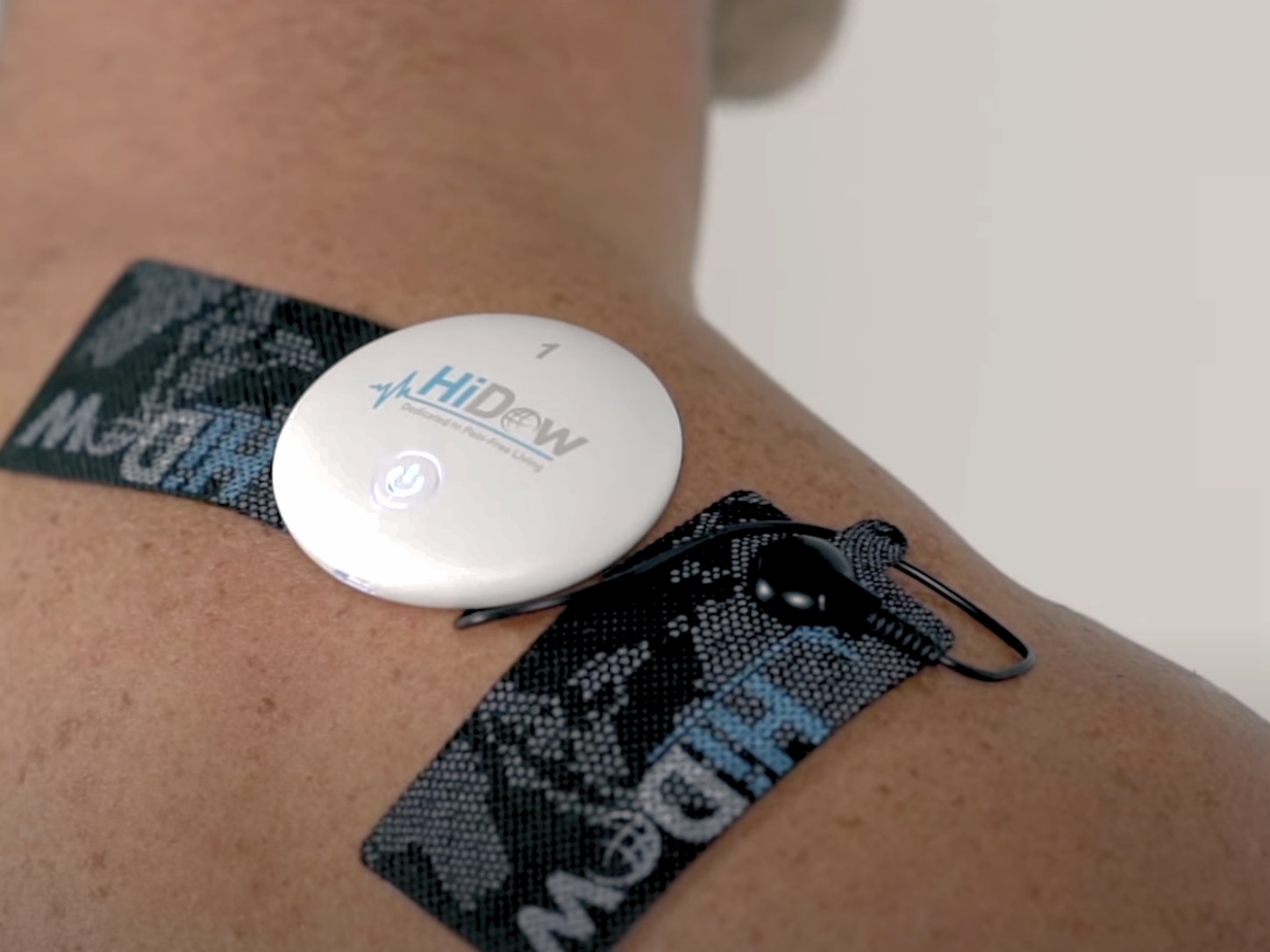
How Muscles Connect
Reaching overhead, bending to tie a shoe, turning to check a blind spot. Movements like these depend on muscles that stretch across more than one part of the body.
Muscles attach to bone at two points: an origin point, which stays relatively still, and an insertion point, which moves when the muscle contracts.
Tension at one end can travel and surface at the other. The hip flexors are a clear example, running from the lower spine and pelvis to the upper thigh, which is why a tight hip can just as easily show up as a familiar ache in the low back.
Stretches by Body Area
Upper Trapezius
 Neck
Trapezius
Shoulder
Back
Neck
Trapezius
Shoulder
Back

The feeling
Tightness along the side of the neck and top of the shoulder, often more noticeable after desk work, driving, travel, or long periods of sitting.
The muscles
The upper trapezius connects the base of the skull and neck to the collarbone and shoulder blade. Tension may be felt in the neck, across the shoulder, or between the two.
The stretch
Sit or stand upright and relax both shoulders. Tilt your right ear toward your right shoulder without turning your head or lifting the shoulder. You should feel the stretch along the left side of your neck and upper shoulder. Repeat on the other side.
Pad placement
Rear Shoulder
Shoulder
Upper arm
Trapezius
Upper back

The feeling
Tightness at the back of the shoulder, often more noticeable when reaching across the body.
The muscles
The rear deltoid connects the shoulder blade to the upper arm. It crosses the back of the shoulder and contributes to several arm movements.
The stretch
Bring one arm across your chest at shoulder height. Use the opposite arm to bring it closer while keeping the shoulder relaxed and away from your ear. You should feel the stretch across the back of the shoulder.
Pad placement
Chest & Front of Shoulders
Chest
Front shoulder
Upper arm
Upper back

The feeling
Tightness across the chest or front of the shoulders, often after sitting, driving, computer work, or upper-body exercise.
The muscles
The pectoralis major connects the collarbone, breastbone, and ribs to the upper arm. It crosses the front of the shoulder and affects how the arm moves backward.
The stretch
Place both forearms flat against a doorway, elbows just below shoulder height. Step forward until you feel the stretch across your chest and shoulders. Keep your ribs down and lower back neutral.
Pad placement
Glutes
Glutes
Hip
Lower back
Upper thigh

The feeling
Tightness through the buttock or back of the hip, sometimes with stiffness across the lower back.
The muscles
The gluteus maximus connects the pelvis and sacrum to the upper thigh and iliotibial band. It crosses the back of the hip and helps move the hip and pelvis.
The stretch
Lie on your back with both knees bent and feet on the floor. Bring one knee toward your chest and hold behind the thigh or over the shin. You should feel the stretch through the buttock and back of the hip on that side.
Pad placement
Deep Gluteal Muscles
Glutes
Outer hip
Upper thigh
Lower back

The feeling
Tightness deep in the buttock or outer hip, often more noticeable after sitting, driving, walking, or lower-body exercise.
The muscles
The piriformis and other deep gluteal muscles connect the pelvis to the top of the thigh bone. They help rotate and control the hip.
The stretch
Sit near the front of a stable chair and place one ankle across the opposite thigh. Keep your back straight and lean forward from the hips. You should feel the stretch in the buttock or outer hip on the side of the crossed leg.
Pad placement
Hip Flexors
Hip
Upper thigh
Glutes
Lower back

The feeling
Tightness at the front of the hip, often after long periods of sitting or when standing fully upright.
The muscles
The iliopsoas runs from the lower spine and pelvis to the upper thigh. Restricted hip movement can sometimes be accompanied by tension through the lower back.
The stretch
Step one foot forward and soften both knees. Draw your belt buckle toward your ribs, then move your hips toward the front foot without arching your lower back. You should feel the stretch at the front of your back hip.
Pad placement
Forearm Flexors
Inner elbow
Forearm
Wrist
Hand

The feeling
Tightness along the palm side of the forearm, often more noticeable after gripping, lifting, typing, golf, racquet sports, or repeated hand movements.
The muscles
The forearm flexors begin near the inside of the elbow and extend toward the wrist and fingers. Repeated hand or wrist movement can create tension farther up the forearm.
The stretch
Extend one arm in front of you with the palm facing up. Keep the elbow straight without locking it. Use the opposite hand to guide the fingers toward the floor. You should feel the stretch along the palm side of the forearm.
Pad placement
Forearm Extensors
Outer elbow
Forearm
Wrist
Hand

The feeling
Tightness along the top of the forearm, often more noticeable after gripping, typing, lifting, or repeated wrist movement.
The muscles
The forearm extensors begin near the outside of the elbow and extend toward the wrist and fingers. Tension from hand use may also be felt near the elbow.
The stretch
Extend one arm in front of you with the palm facing down. Bend the wrist so the fingers point toward the floor. Use the opposite hand to guide the fingers slightly toward your body. You should feel the stretch along the top of the forearm.
Pad placement
Triceps
Triceps
Upper arm
Elbow
Shoulder

The feeling
Tightness along the back of the upper arm, often more noticeable when reaching overhead or bending the elbow.
The muscles
The triceps runs along the back of the upper arm and attaches below the elbow. Its longest section begins at the shoulder blade and crosses both the shoulder and elbow.
The stretch
Raise one arm overhead and bend the elbow, moving your hand toward your upper back. Place the opposite hand above the raised elbow and guide it slightly inward. You should feel the stretch along the back of the upper arm.
Pad placement
Quadriceps
Quadriceps
Front thigh
Knee
Hip

The feeling
Tightness along the front of the thigh, often more noticeable after walking, running, cycling, climbing stairs, or standing for long periods.
The muscles
The quadriceps run along the front of the thigh and connect to the kneecap through the quadriceps tendon. One of these muscles, the rectus femoris, crosses both the hip and knee.
The stretch
Stand beside a stable surface and hold it for balance. Bend one knee and bring your heel toward your buttock. Hold your ankle or pant leg, keeping both knees pointed toward the floor. You should feel the stretch along the front of the bent leg’s thigh.
Pad placement
Hamstrings
Hamstrings
Back thigh
Knee
Glutes

The feeling
Tightness along the back of the thigh, often more noticeable when straightening the leg, bending forward, running, or taking a longer stride.
The muscles
The hamstrings connect the lower pelvis to bones below the knee. Because they cross the hip and knee, the position of either joint changes how the muscles lengthen.
The stretch
Place one heel on a low, stable surface and keep that knee slightly bent. Keep your back straight and lean forward from the hips. You should feel the stretch along the back of the raised thigh.
Pad placement
Upper Calf
 Upper calf
Lower leg
Ankle
Heel
Upper calf
Lower leg
Ankle
Heel

The feeling
Tightness through the upper calf, often more noticeable after walking, running, climbing stairs, or standing for long periods.
The muscles
The gastrocnemius begins above the knee and joins the Achilles tendon at the heel. It crosses the knee and ankle, so keeping the knee straight places more of the stretch through this muscle.
The stretch
Place both hands against a wall and step one foot back. Point both feet forward and keep the back knee straight. Press the back heel toward the floor as you move toward the wall. You should feel the stretch through the upper calf of the back leg.
Pad placement
Lower Calf
Lower calf
Achilles
Ankle
Heel

The feeling
Tightness in the lower calf or near the Achilles tendon, often more noticeable when the ankle bends with the knee bent.
The muscles
The soleus sits beneath the gastrocnemius and connects the lower leg to the Achilles tendon. It doesn’t cross the knee, so bending the knee changes where the stretch is felt.
The stretch
Place both hands against a wall and step one foot back. Keep the back heel on the floor and gently bend the back knee as you move toward the wall. You should feel the stretch in the lower calf of the back leg.
Pad placement
Plantar Fascia
Arch
Sole of foot
Ankle
Heel

The feeling
Tightness through the arch or underside of the foot, often more noticeable after rest, long periods of standing, walking, running, or wearing restrictive shoes.
The muscles
The plantar fascia is a band of connective tissue that runs from the heel toward the base of the toes. Pulling the toes upward places tension through the fascia and arch.
The stretch
Sit and place one ankle across the opposite thigh. Hold the toes and gently pull them toward the shin. You should feel the stretch through the arch and underside of the foot.
Pad placement
Before,
During & After
TENS/EMS
Before
If you’ve been inactive or the area feels stiff, move gently for two to five minutes before your session. Walking, shoulder rolls, slow torso rotations, ankle circles, or bending and straightening the targeted joint can help prepare the area without a deep stretch.
During
Choose a comfortable, supported position and follow the device instructions and placement guide. Don’t stretch while the stimulation feels strong or produces a muscle contraction.
After
Hold each stretch for 15 to 30 seconds and repeat one to three times as comfortable.
From Stretch to Pad Placement
Find pad placement guidance organized by body area.
View the Pad Placement Guide
Stretching and TENS/EMS safety +
Stretching
A stretch should produce mild tension, not pain. Don’t bounce or force the movement. Stop with sharp, burning, or electrical pain, or if your symptoms get worse.
TENS/EMS
Don’t perform balance-dependent stretches while connected to the device. Place electrodes only on intact skin, stop stimulation if it becomes painful or causes irritation, and follow the device instructions and contraindications.
Before starting
Talk with an appropriate healthcare professional if you have an injury, recent surgery, significant swelling, loss of sensation, undiagnosed pain, or symptoms that persist or get worse.
This guide is for general wellness education and isn’t a substitute for medical diagnosis or treatment.