
Pain can show up in different places for different reasons. Understanding what you’re feeling is a good place to start.
Explore what may be behind common aches, nerve discomfort and joint pain, with practical guidance for movement, recovery and targeted TENS/EMS.
Knee, Hip & Lower-Back Pain
Your knees, hips and lower back handle a lot of the same movement. Discomfort in one can affect how you move through the others.
Understand it
Start with where it hurts. The location can offer clues about what may be involved.
Knee. Pain around the kneecap may involve the patellar tendon or cartilage. Pain along either side may involve a ligament or the meniscus, while discomfort behind the knee can relate to tight muscles or tendons.
Hip. Pain deep in the groin often points toward the hip joint or hip flexors. Outer-hip tenderness may involve the gluteal tendons or bursa, while an ache through the glute may come from the muscles or lower back.
Lower back. Discomfort may involve the muscles, joints or discs. Burning, tingling or numbness that travels into the glute or leg may involve irritation around a nearby nerve.

What may help
Knee. Keep it moving with easy walking and comfortable bending and straightening. Reduce deep squats, kneeling or quick direction changes when they aggravate it.
Hip. Shorten your stride or reduce deep hip bending when needed. Avoid lying directly on a sore outer hip and break up long periods of sitting.
Lower back. Change positions regularly, keep loads close when lifting and use easy walking or comfortable mobility instead of staying still.
Build strength gradually around the legs, hips and trunk to better support walking, bending and standing.
Add TENS/EMS
Use the AcuKnee Wrap or AcuBelt for broader coverage. Use the two included pads when you want to target a more specific area.
- Knee: For pain around the kneecap, place one pad beside it and the other above it over the quadriceps. For pain along either side, place one pad just above and one just below the sore area. Avoid the kneecap, other bony areas and the knee crease.
- Front of the hip or groin: Place one pad on the upper front thigh and the other farther out on the front or side of the hip. Never place pads directly over the groin or genitals.
- Outer hip: Place one pad above the tender area over the side glute and the other below it on the upper outer thigh. Avoid the bony point of the hip.
- Glute: Place one pad over the upper glute and the other below it across the muscle, or use the AcuBelt for broader coverage.
- Lower back: Place one pad on each side of the spine at the level of the discomfort, or place both around a focused area on one side. Never place pads directly over the spine. Use the AcuBelt for broader coverage.
For temporary pain relief, try Mode 3: Tapping. For muscle activation, place both pads over the quadriceps, glutes or lower-back muscles and select Mode 12: Passive Exercise.
15-minute routine

2 min · MOVE
10 min · TENS
3 min · MOVE AGAIN

2 min · MOVE
Start with easy walking or comfortable mobility through the area.

10 min · TENS
Use the AcuKnee, AcuBelt or electrode pads at a strong, comfortable intensity.
3 min · MOVE AGAIN
Finish with easy walking or comfortable mobility through the area.
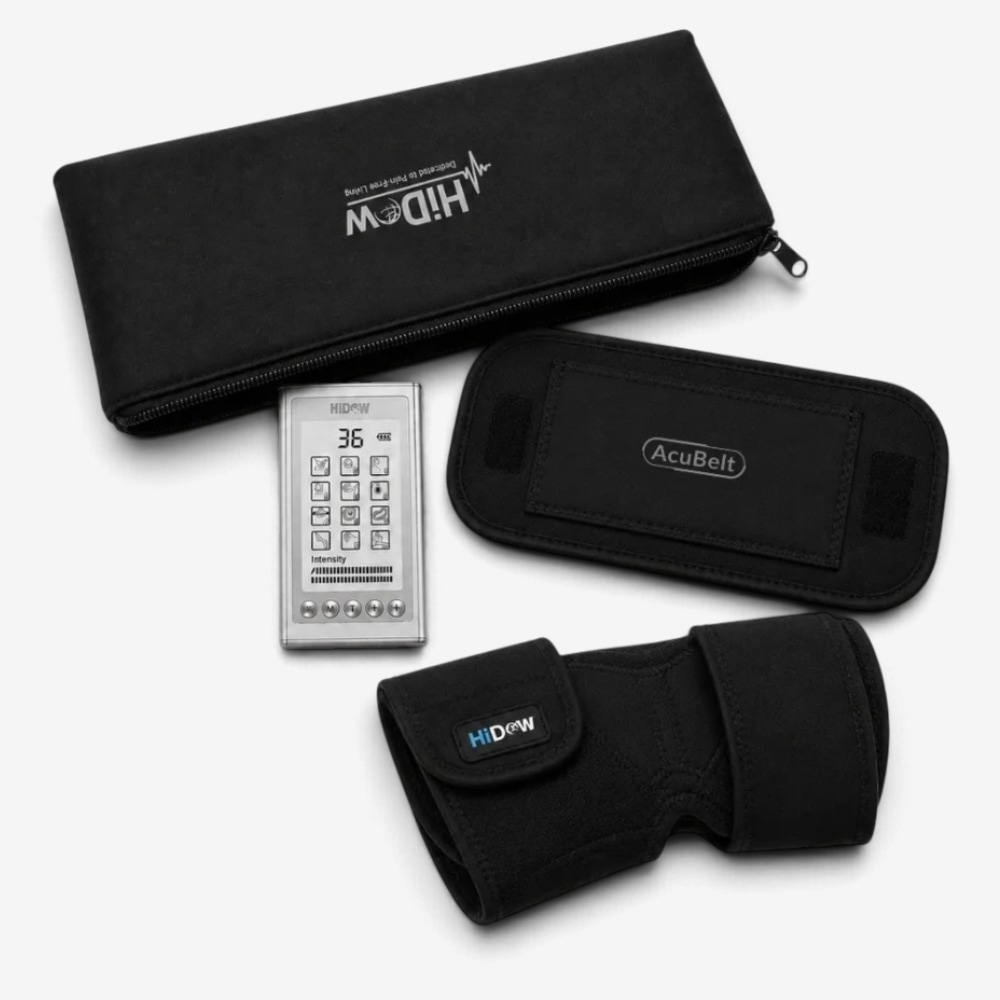
Knee, Hip & Back Kit
TENS/EMS coverage for the joints and muscle groups involved in walking, bending and standing.
$600 $99
Includes
Wired TENS/EMS · AcuKnee Wrap · AcuBelt · Pads
Foot, Leg & Nerve Discomfort
Nerve discomfort can feel different from everyday muscle soreness. Tingling, burning, numbness and sensitivity can show up in the feet and legs, sometimes alongside aching or pain.
Understand it
Peripheral nerves carry signals between the brain, spinal cord and the rest of the body. When those nerves are irritated or damaged, those signals can change, causing tingling, burning, numbness or pain.
Neuropathy can have many causes, including diabetes, injury and certain medications. Tired or aching feet can also come from long periods of standing, walking or physical activity. New or persistent changes in sensation should be checked out.

What may help
Stay in motion. Walking and regular movement can help maintain strength and mobility in the feet and legs.
Move the feet and ankles. Pointing, flexing and circling the feet moves the ankle through its natural range, especially after long periods of sitting or standing.
Pay attention to sensation. If feeling in your feet is reduced, check regularly for irritation, pressure spots or injuries you might not notice right away.
Add TENS/EMS
TENS uses low-frequency pulses to target sensory nerves, interrupting pain signals before they reach the brain. It can provide temporary relief from uncomfortable sensations, but it doesn’t repair damaged nerves or address the underlying cause of neuropathy.
EMS uses gentle electrical pulses to contract and relax the muscles of the feet and lower legs, which can support circulation, reduce swelling and aid recovery.
Use the Foot Stim Pads flat on the floor for the soles of the feet, wrapped around the calf or thigh for broader coverage, the AcuBelt for the lower back, or electrode pads when you want more targeted placement.
- Soles of the feet: Place the Foot Stim Pads flat on the floor and stand on them for full-sole coverage.
- Calves or thighs: Secure the Foot Stim Pads around the area with an Elastic Hold-In-Place Wrap for broader, contoured coverage.
- Sides or arch of the foot: Use electrode pads along the arch or sides of the foot for more targeted, radiating discomfort.
- Lower back: Wrap the AcuBelt around the lower back, centered over the area that may be contributing to leg or foot symptoms.
15-minute routine
2 min · MOBILITY
10 min · TENS
3 min · WALK
2 min · MOBILITY
Point and flex the feet, then circle each ankle in both directions.
10 min · TENS
Use the Foot Pads, AcuBelt or electrode pads at a comfortable intensity.
3 min · WALK
Finish with easy walking to get the feet and lower legs moving.
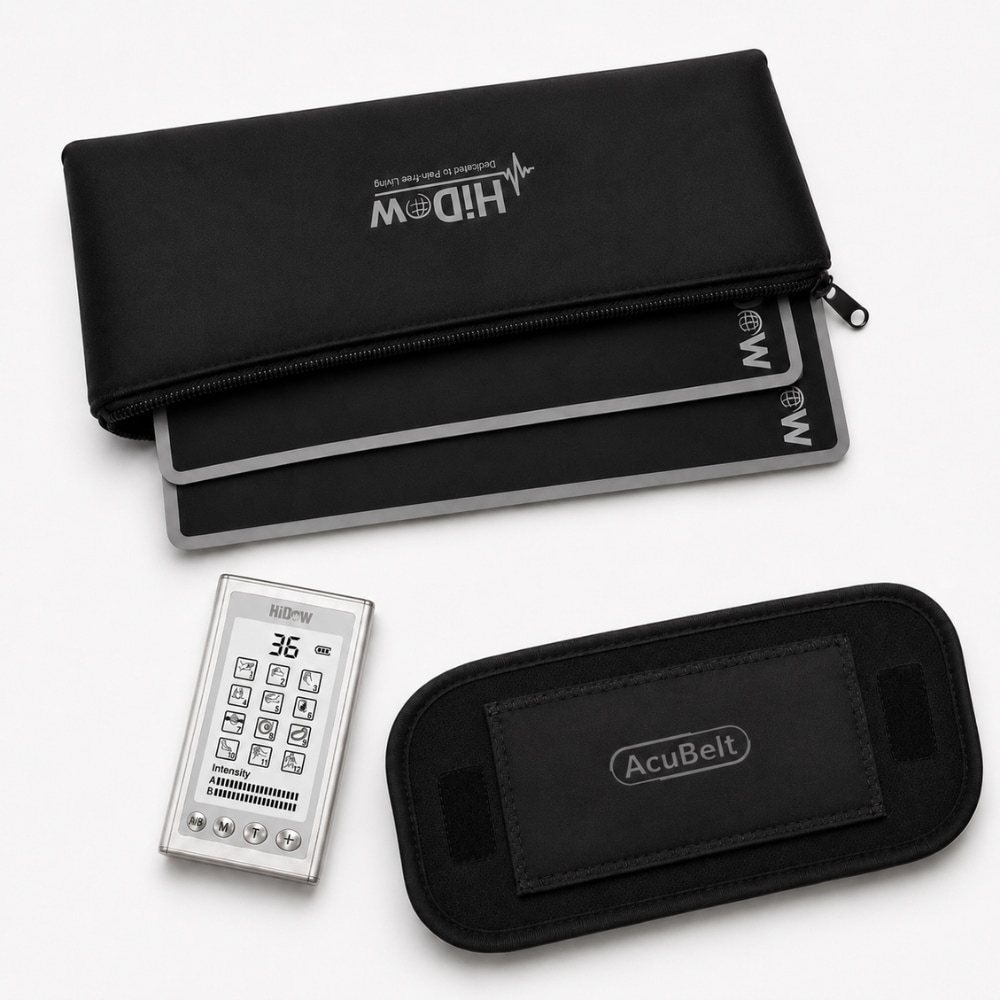
Foot & Leg Kit
Relief for both feet, with targeted coverage
for the calves, thighs and lower back.
$588 $99
Includes
Wired TENS/EMS · Foot Stim Pads · AcuBelt · Pads
Sciatica & Radiating Leg Pain
Sciatica can cause pain, burning, tingling or numbness that starts around the lower back or glute and travels into the leg.
Understand it
The sciatic nerve begins with nerve roots in the lower back, then runs through the glute and down each leg. When a nerve root is irritated or compressed near the spine, discomfort can be felt anywhere along that connected pathway.
That’s why pain may show up in the thigh, calf or foot even when the source is higher up. It can affect the full route, or only one section of it. Pain in the calf or foot can begin much higher up, even when the lower back doesn’t hurt at all.
Progressive weakness, severe numbness or changes in bladder or bowel control need prompt medical attention.
What may help
Keep moving. Easy walking and normal daily activity are generally better than spending long periods resting in bed.
Change positions. If sitting aggravates your symptoms, break up longer periods of sitting with standing or walking.
Be selective with stretching. There isn’t one stretch that works for every case of sciatica. Stick with movements that feel comfortable and don’t send symptoms farther down the leg.
Add TENS/EMS
TENS can provide temporary relief around the lower back, glute or leg, but it doesn’t address the underlying cause of sciatica.
Use the AcuBelt for broader coverage or the XL pads for more targeted placement.
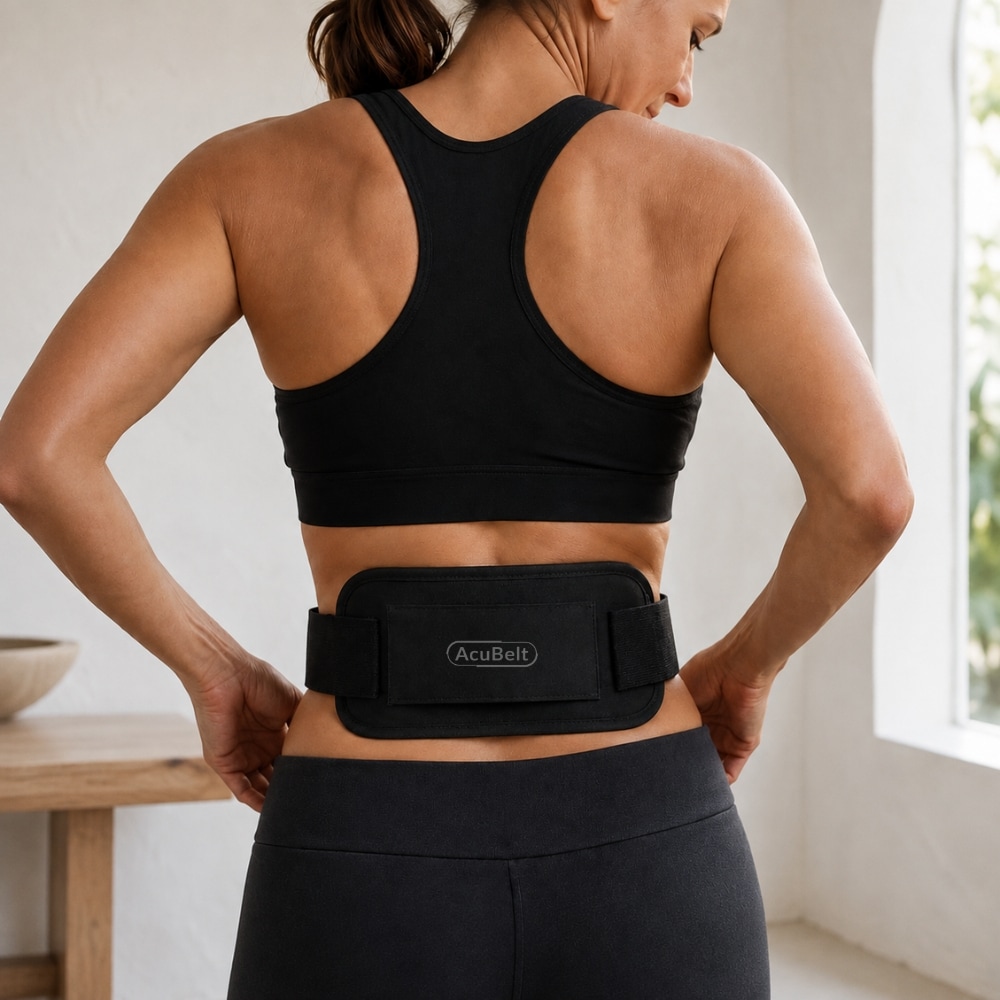
- Lower back: Wrap the AcuBelt around the lower back and hips, centered over the painful area.
- Glute: If pain starts deep in the hip or glute, place both pads around the painful area, either vertically or horizontally to frame it.
- Radiating leg pain: Follow the path of the sciatic nerve by placing one pad on the lower back or hip and the other farther down the thigh or calf where the pain travels. Keep pads at least one inch apart.
15-minute routine
3 min · WALK
10 min · TENS
2 min · WALK AGAIN
3 min · WALK
Start with easy walking at a comfortable, natural pace.
10 min · TENS
Use the AcuBelt or XL electrode pads at a strong, comfortable intensity.
2 min · WALK AGAIN
Finish with easy walking and notice how your symptoms respond.
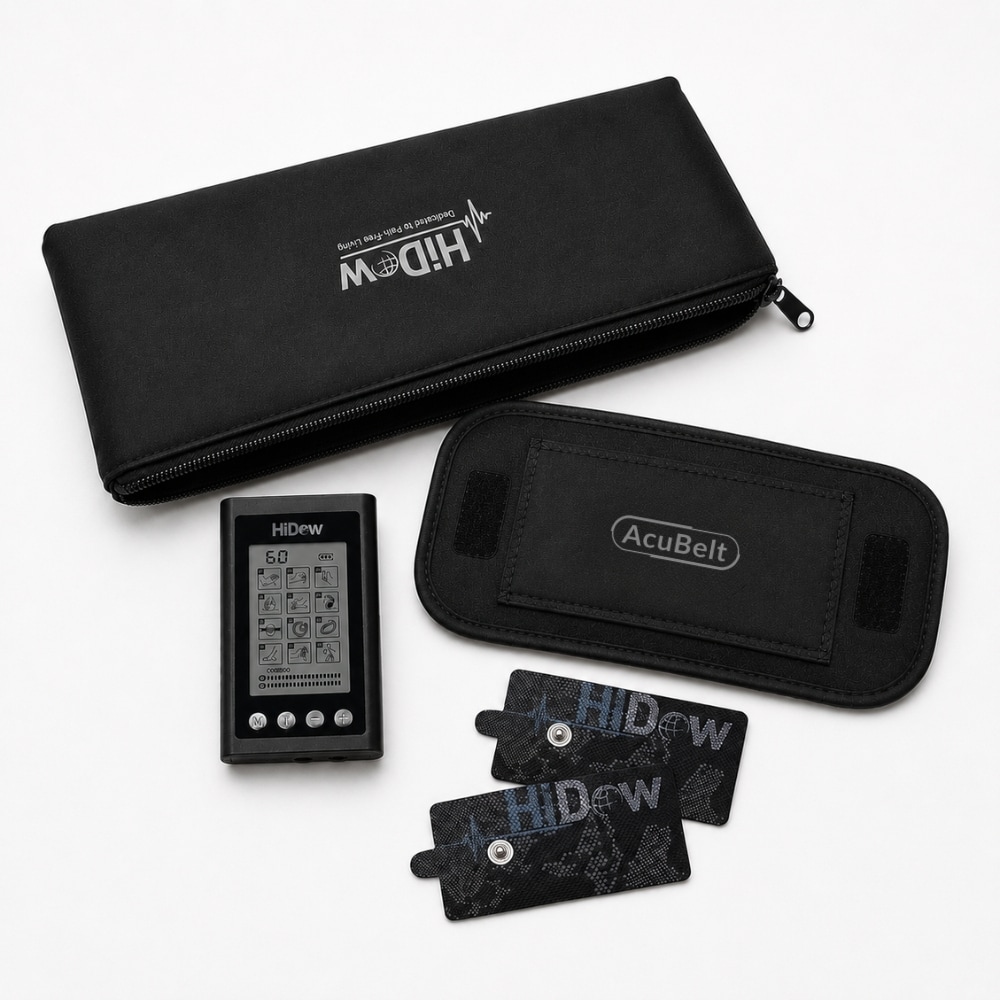
Sciatica Kit
Go broad across the lower back and hips or
target the glutes and legs as discomfort shifts.
$399 $99
Includes
Wired TENS/EMS · AcuBelt · 2 Sets of XL Pads
Wrist & Elbow Pain
Typing, gripping, lifting and repetitive movement all put regular stress on the wrist, forearm and elbow. Different muscles, tendons, joints and nerves can be involved, even when the discomfort feels similar.
Understand it
Tennis elbow
Pain or tenderness along the outside of the elbow may involve the tendons that connect the forearm muscles to the joint. Gripping, lifting or bending the wrist back can aggravate it. No tennis required.
Golfer’s elbow
Pain along the inside of the elbow may involve the tendons used to bend the wrist and fingers. Gripping, lifting or turning the palm downward can make it more noticeable. Golf is optional here, too.
Carpal tunnel
Carpal tunnel involves pressure on the median nerve at the wrist. It can cause pain, tingling, numbness or weakness across the thumb, index, middle and part of the ring finger, usually skipping the pinky. Repetitive hand and wrist use may aggravate these sensations.
Persistent numbness, worsening pain or changes in grip strength are worth getting checked out.

What may help
Change the load. If a repetitive movement is aggravating the area, reduce the weight, resistance or repetition for a bit and build back gradually.
Keep it moving. Gentle wrist and forearm mobility can help prevent stiffness while you reduce aggravating activity.
Build strength gradually. Progressive wrist and forearm exercises are commonly used for tendon-related elbow pain.
Add TENS/EMS
TENS can provide temporary pain relief around the wrist, elbow and forearm, at a strong but comfortable intensity for 20 to 30 minutes. EMS can be used for muscle activation and recovery.
Use the AcuWrist Wrap or AcuElbow Wrap for targeted therapy around the joint, or electrode pads for more precise placement across the surrounding forearm muscles.
- Wrist with AcuWrist Wrap: Wrap it around the wrist and use TENS for temporary relief, or EMS to activate the surrounding muscles.
- Wrist with pads: For carpal tunnel or repetitive-use wrist discomfort, place 2 small pads on the inner wrist or forearm, along the path of the median nerve, at least one pad’s width apart. Avoid placing pads over broken skin or areas with complete numbness.
- Elbow with AcuElbow Wrap: Wrap it around the elbow and use TENS for temporary relief, or EMS to activate the surrounding muscles.
- Elbow with pads: Place 2 pads above and below the site of pain, or use 4 pads in a cross pattern around the elbow joint or affected muscle in the forearm.
15-minute routine
2 min · MOBILITY
10 min · TENS
3 min · MORE MOBILITY
2 min · MOBILITY
Flex and extend the wrist, then slowly rotate the forearm.
10 min · TENS
Use the AcuWrist, AcuElbow or pads at a comfortable intensity.
3 min · MORE MOBILITY
Finish with easy wrist, hand and forearm movement.

Wrist & Elbow Kit
Targeted TENS/EMS for wrist, elbow
and repetitive-use discomfort.
$399 $99
Includes
Wired TENS/EMS · AcuWrist Wrap · AcuElbow Wrap · Pads